
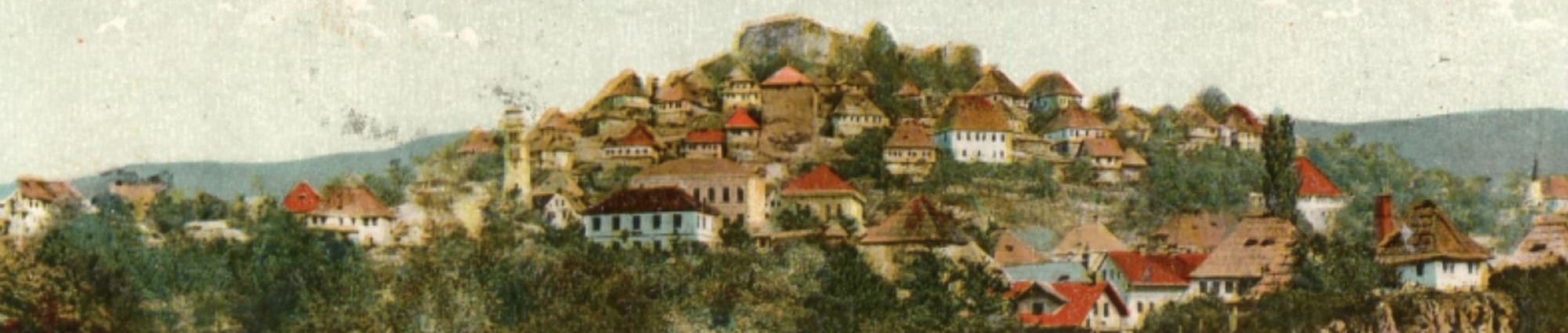
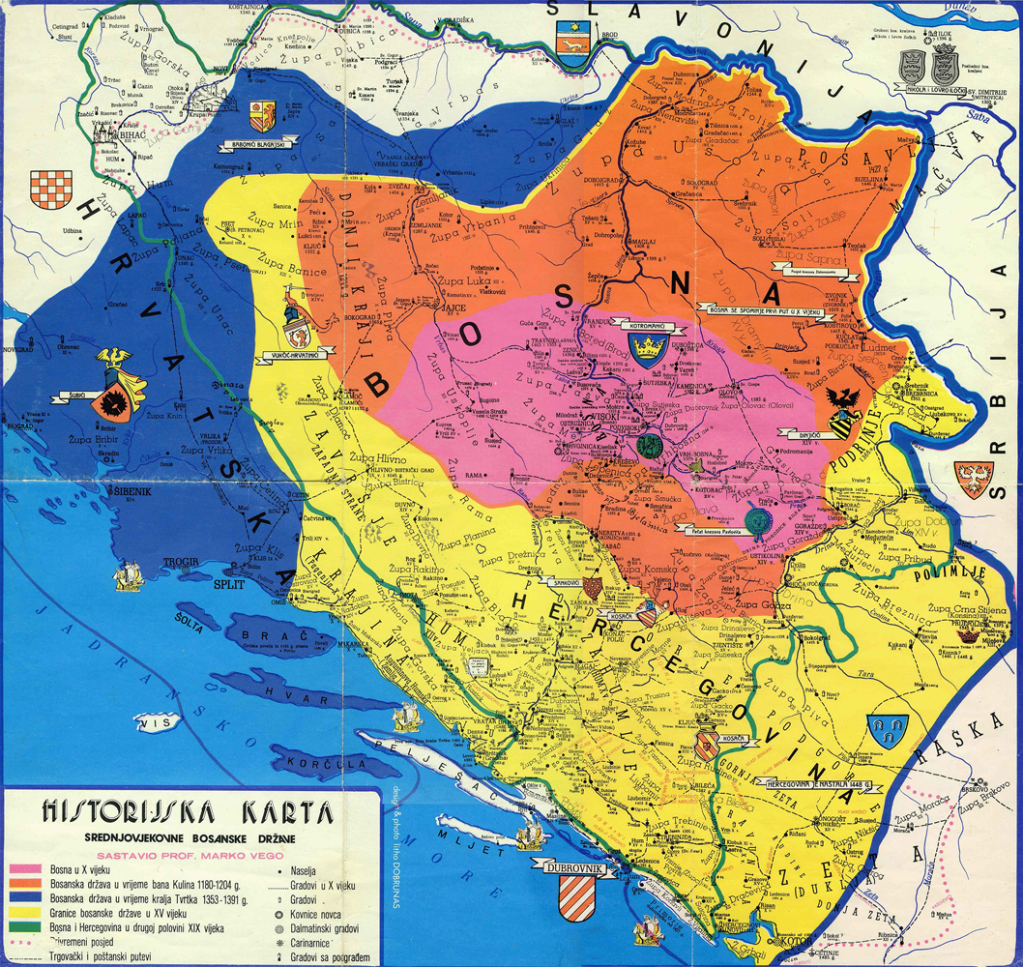
Bosnia is a land defined by rugged terrain, from the dense forests and verdant pastures of central Bosnia to the arid, rocky expanses of western Herzegovina. Crisscrossed by largely unnavigable rivers, the region’s geography has historically provided both refuge and isolation. Situated between key migration routes—the Dalmatian coastline and the lowlands stretching from Belgrade through Serbia and into Macedonia—Bosnia was shielded from the direct impact of many invasions. While Serbia’s fertile lands and Dalmatia’s coastal towns bore the brunt of these incursions, Bosnia absorbed their effects more indirectly, resulting in a unique amalgamation of peoples and cultures. Mountainous regions like Bosnia have historically served as sanctuaries for populations displaced from flatter areas, as seen with the Basques in the Pyrenees or the ethnic mosaic of the Caucasus. Linguistic unity among the Slavs, established during the invasions of the 6th and 7th centuries, eventually supplanted earlier languages, but Bosnia’s rich diversity remains evident to this day.
The Arrival of the Slavs and the Layers of Bosnia’s Past
The modern population of Bosnia identifies culturally and linguistically as Slavic, largely due to over a millennium of shared history. The arrival of the Slavs in the Balkans marks a logical starting point for Bosnian history, but understanding earlier inhabitants is equally important. The region’s earliest documented people were the Illyrians, a network of tribes that spanned much of the western Balkans, including modern-day Albania. These tribes, who spoke an Indo-European language, were known for their livestock farming, particularly sheep, pigs, and goats. Among them were the Delmatae, whose name may be linked to the Albanian word for sheep, and the Daesitiates, a central Bosnian tribe famous for their fierce resistance to Roman rule until AD 9.
After the Roman conquest, Bosnia was integrated into the provinces of Dalmatia and Pannonia. Roman infrastructure brought roads and settlements, facilitating military campaigns, trade, and resource extraction, including the mining of gold and silver. Early Christianity also spread rapidly, evidenced by numerous Roman basilicas discovered across Bosnia. However, this initial Christian era was disrupted by the Gothic invasions, which marked the end of Roman dominance.
The Role of the Illyrians in Bosnia’s Ethnic Mosaic
Illyrians were heavily recruited into Roman military service, and their lands became a cradle for provincial leaders who rose to prominence as Roman emperors. Despite their integration, little is known about Illyrian society due to Roman biases, though intriguing details, such as their practice of tattooing, have been uncovered. Tattooing, absent in Slavic traditions, persisted in Bosnia into modern times, suggesting that some Illyrians survived the waves of invasions and were absorbed into the Slavic population. Romanticized 19th-century theories attempting to claim Serbs and Croats as pure Illyrians, however, reflect modern political agendas rather than historical realities.
Other Influences: Goths, Huns, and Avars
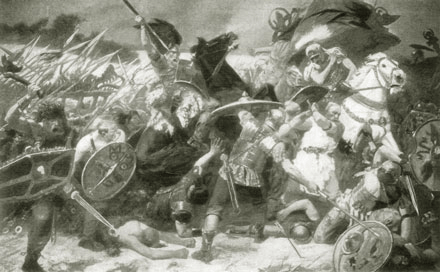
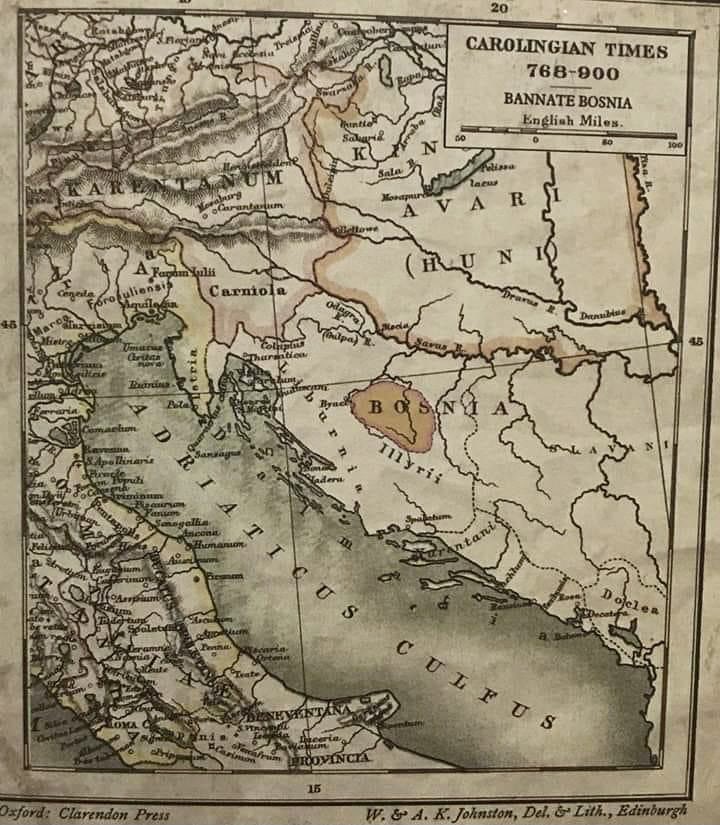
Between the fall of Roman rule and the arrival of the Slavs, Bosnia was visited by numerous groups, including Goths, Huns, and Avars. Archaeological evidence suggests that Avars, a Turkic group, left a lasting imprint in Bosnia, with place names like Obrovac hinting at their presence. Even the title “ban,” used by early Bosnian rulers, may trace its origins to Avar traditions. By the 7th century, the Slavs were the dominant group, with new tribes such as the Serbs and Croats arriving soon after.
The Serbs and Croats: A Shared but Complex Past
The origins of the Serbs and Croats are entwined with Slavic and Iranian influences. Historical evidence suggests that their ruling elites may have been of Iranian descent, having adopted Slavic subjects during their migration from the steppes north of the Black Sea. Both tribes eventually moved into the western Balkans, establishing early settlements and mingling with the local Slavic population, which was already significant by their arrival.
Croats and Serbs settled in areas corresponding roughly to modern Croatia, Bosnia, and Serbia. While Bosnia’s population may have had ties to both groups, its unique identity began to solidify during this period. Pagan traditions, including mountain worship and ancient deities, persisted in Bosnia, later influencing both Christianity and Islam.

Bosnia Emerges: From Byzantine Rule to Independence
From the 7th to 11th centuries, the political landscape of the Balkans was marked by shifting alliances and conquests. Bosnia’s mountainous terrain often kept it on the fringes of larger empires, including Byzantium and Hungary. By the 12th century, Bosnia had gained a degree of independence under its own rulers, beginning a distinct political trajectory.
In 1180, the chronicler John Kinnamos noted that Bosnia did not obey the Serbian grand župan and had its own customs and governance. This marked the emergence of Bosnia as a separate entity, distinct from its neighbors. Although its population was undeniably Slavic, Bosnia’s ethnic identity defied simple categorization, as it encompassed a mosaic of cultural and historical influences.
The Layers of Bosnian Identity
The question of whether medieval Bosnians were Serb or Croat cannot be answered definitively; it is both historically unfounded and irrelevant. Genetic research has revealed that modern Bosnians have a complex heritage, with Illyrian, Slavic, Celtic, and other influences. This diversity underscores Bosnia’s long history as a melting pot of cultures, shaped by waves of migration and conquest. Above all, Bosnia’s story is one of resilience and complexity, woven into the fabric of the Balkans.

 Bosnian History